We believe in a long-term, partnership approach.
“Legacy made the decision to enter into a long-term relationship with H
2O Midstream to outsource a portion of our produced water needs due to the reliability and efficiency of their water hub infrastructure and interconnected water gathering system. We expect this agreement to improve our full-cycle water costs, reduce our environmental footprint, and promote safety.”
– Dan Westcott, Legacy’s President and Chief Financial Officer
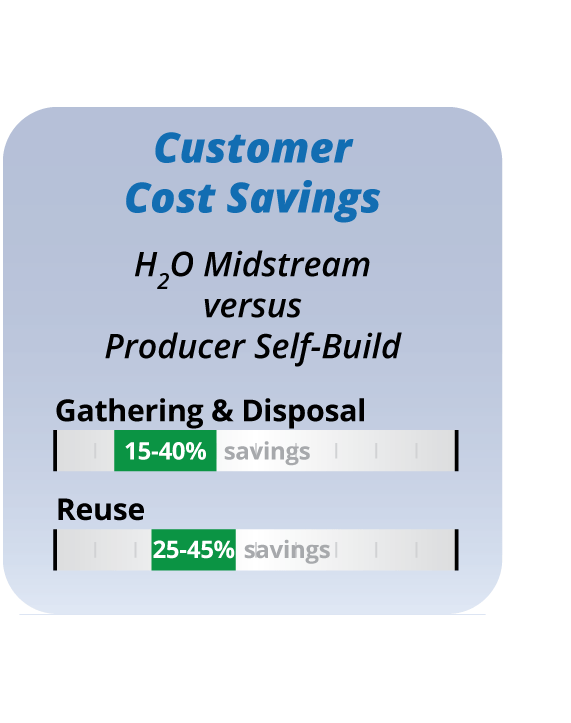
We create long-term value by offering unique and customized contracting structures and operational approaches to address complex water related challenges.
H2O Midstream prides itself on honest, straightforward and equitable relationships with all of our customers, partners and vendors. Whether a producer is seeking a midstream partner to manage produced or flowback water from ‘source to sink’ or wants to retain operational control over its water infrastructure under a flexible capital arrangement, H2O Midstream can tailor the appropriate structure to meet their individual goals and achieve a win/win solution.
[...]